Sanxingdui Museum: Decoding the Lost Ancient Shu Civilization
Planning a visit to Sanxingdui Museum? Read our practical travel guide with ticket prices, opening hours, recommended routes, and essential tips for tourists.
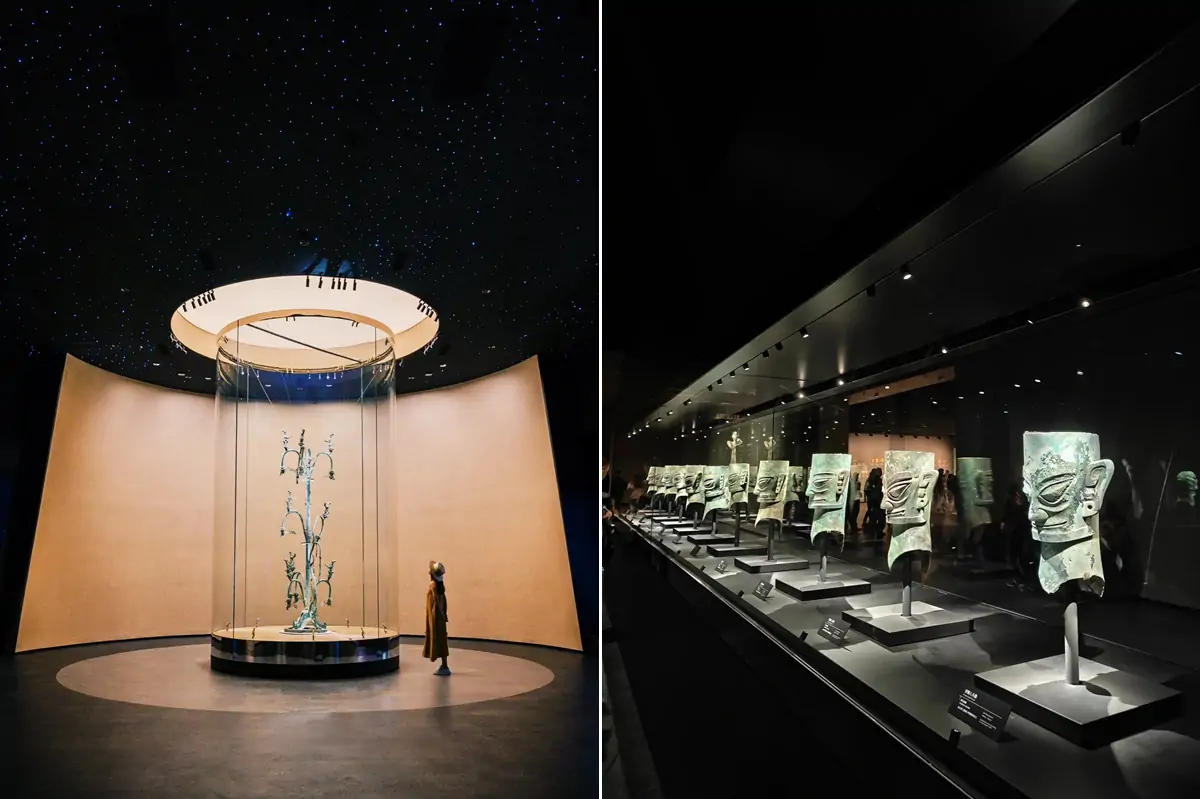
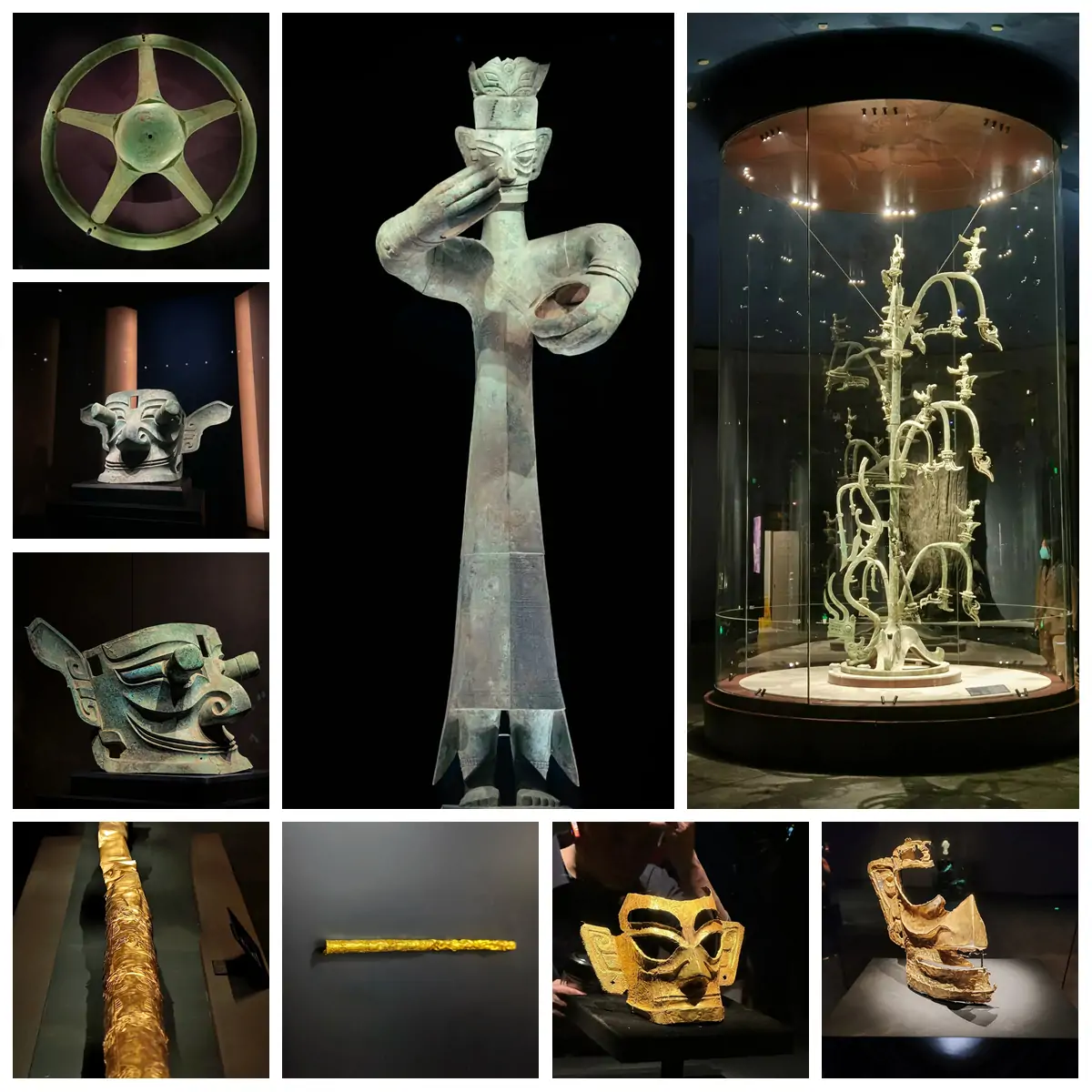
Located in Guanghan, Sichuan, the Sanxingdui Museum is one of the most mysterious and stunning archaeological sites in China. It is recognized as "one of the greatest archaeological discoveries of the 20th century." The museum is most famous for the Bronze Standing Figure, the Bronze Sacred Tree, the Golden Mask, and the Bronze Mask with Protruding Eyes. Many tourists feel a sense of an "alien civilization" when seeing them for the first time. The site gets its name from the three undulating, interconnected loess mounds within its ancient territory, earning the beautiful reputation of "Three Stars Accompanying the Moon." Furthermore, this major discovery confirms the existence of the ancient Shu Kingdom (Sichuan) and pushes the history of the Sichuan region back by more than 2,000 years.
The Mysteries of Sanxingdui
The most mysterious aspect of Sanxingdui is not just that the artifacts look strange, but that it appears to be a highly developed civilization that emerged suddenly and vanished abruptly. To this day, massive mysteries still surround its origin, religious beliefs, writing system, and the reasons behind its disappearance.
1. Why did Sanxingdui shock the world?
Where did the Sanxingdui civilization actually come from? Dating back approximately 3,000 to 5,000 years, the Sanxingdui site is the core ruin of the ancient Shu civilization. However, the unearthed bronze statues feature long noses, deep eyes, wide mouths, and large ears with pierced earlobes. They do not look like ancient Chinese people, but rather resemble individuals from other continents. Were they locals, individuals of mixed heritage, or aliens? Many designs do not even resemble traditional Chinese bronzewares, which deeply shocked the international archaeological community when Sanxingdui was first discovered.
2. Why is there no writing system in Sanxingdui?
Sanxingdui has yielded such a developed civilization with large city walls, mature bronze technology, and a complex sacrificial system, yet no mature writing system has been discovered. During the same period, the Shang Dynasty had Oracle Bone Script, Mesopotamia had Cuneiform, and Ancient Egypt had Hieroglyphs. As a highly developed civilization with a massive capital and complex sacrificial systems, Sanxingdui remains "silent" without written history, which greatly increases the difficulty of research. Was the writing recorded on bamboo, wood, silk, or cloth? Will a complete writing system be excavated in the future?
3. What does the Bronze Sacred Tree actually symbolize?
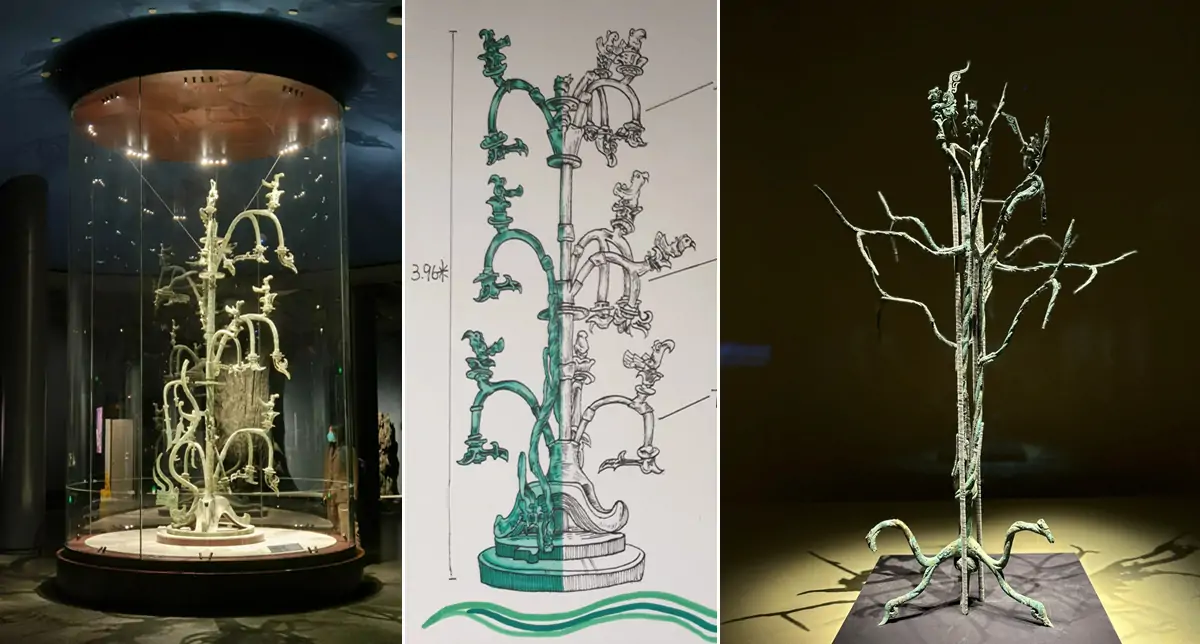
Standing up to 3.96 meters high, the tree is divided into three layers with nine branches and nine birds. This corresponds closely with the mythological records of "Fusang" and "Ruomu" trees in the Classic of Mountains and Seas (Shan Hai Jing). However, the absence of the "tenth bird" triggers much speculation. What do the birds and the dragon on the tree represent?
4. Why did it disappear?
The most thought-provoking and eerie point about the Sanxingdui civilization is that it did not decline slowly. Instead, it came to a sudden halt and disappeared completely at the very peak of its national strength and craftsmanship. The entire civilization seems to have been collectively hit by a "stop button" at a decisive moment in time. The city was abandoned, temples were emptied, and countless heavy artifacts symbolizing divine and royal power—bronze sacred trees, the standing figure, masks, gold canes, ivory, and jades—were all intentionally smashed, burned, and then buried neatly into pits according to a certain ritual. Subsequently, this area was completely forgotten and buried for three thousand years.
Why did Sanxingdui disappear so suddenly? Did it encounter a catastrophic flood? Did the ancient Shu Kingdom migrate to the Jinsha site? Did an earthquake lead to the decline of the civilization? Precisely because none of the assumptions can form a perfect logical loop, the sudden termination of the Sanxingdui civilization has become the heaviest and most fascinating mystery in the tracing of Chinese civilization's origins.
Exhibitions at Sanxingdui Museum
Sanxingdui Museum features 3 core permanent exhibition halls, along with temporary exhibition halls, a digital hall, a conservation center, and other supporting facilities. As a specialized archaeological site museum, it has become a renowned cultural tourism destination at home and abroad, featuring four characteristics: its artifacts, architecture, displays, and gardens.
I. Century-long Dream Chase (1st Floor)
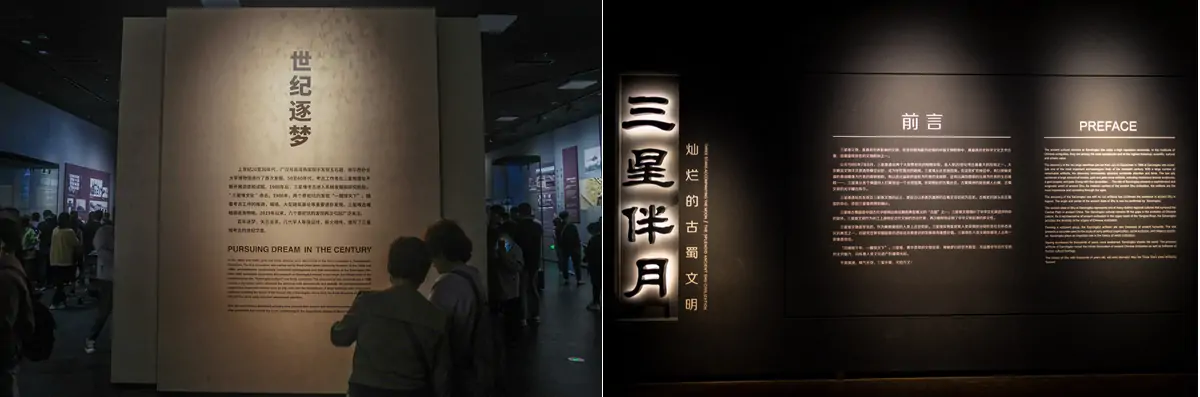
The century-long history of archaeological discoveries at Sanxingdui serves as the "prequel to archaeology." This hall mainly tells the journey of Sanxingdui's archaeological discoveries over the past century, from its initial accidental discovery to the 1986 excavation of Sacrificial Pits No. 1 and No. 2 that shocked the world, and further to the major archaeological achievements of the six new sacrificial pits after 2019. Generations of archaeologists have worked through hardships, passing the torch from one to another, composing a century-long magnificent chapter of Sanxingdui archaeology. Here, you can see historical photographs of the site excavation, important archaeological records, and representative artifacts unearthed during different periods, allowing you to directly feel the persistence of generations of archaeologists and understand how Sanxingdui stepped out from the sleeping soil to rewrite the public understanding of the ancient Shu civilization.
II. Majestic Capital (1st Floor)
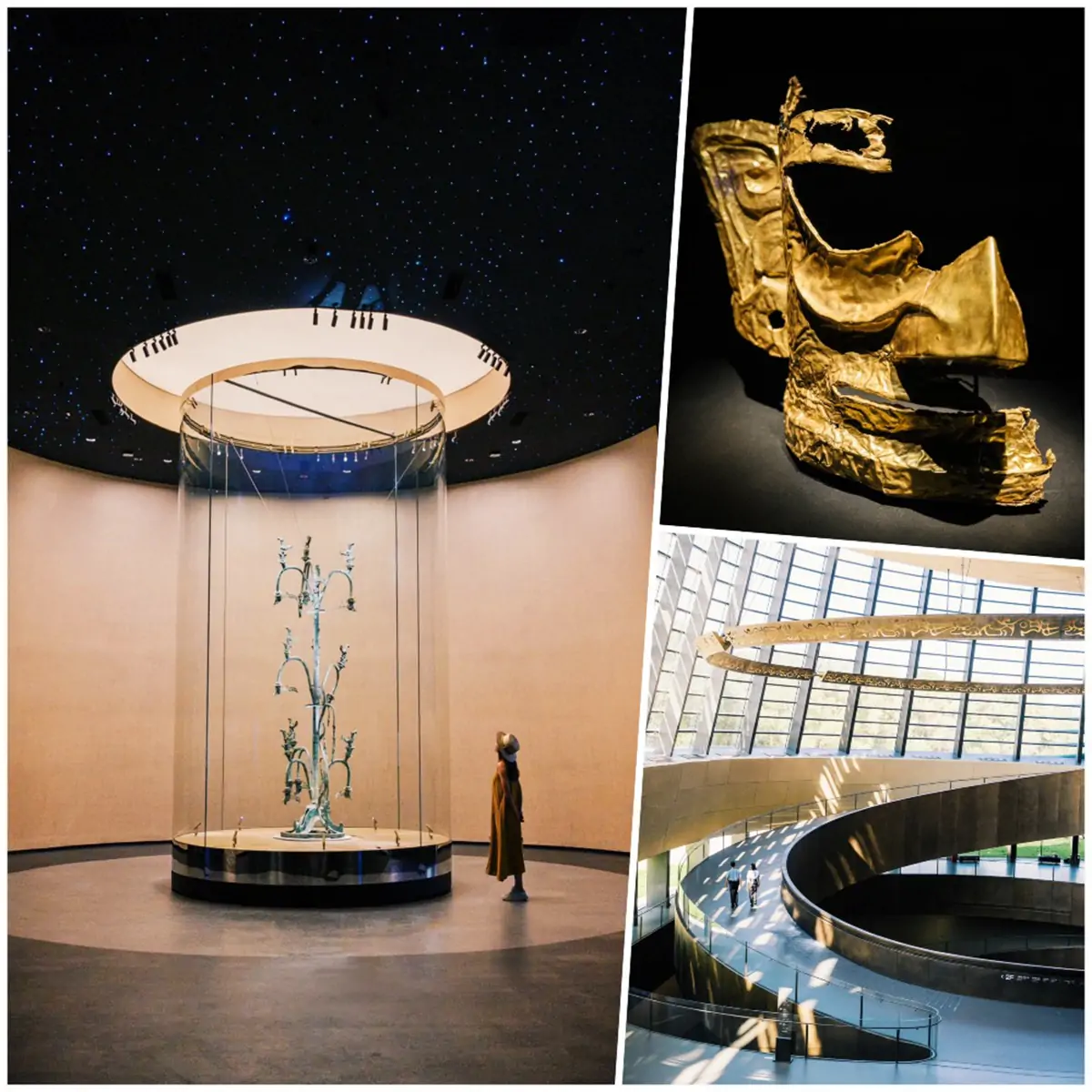
The Majestic Capital hall focuses on the prosperous status of Sanxingdui as the capital of the ancient Shu Kingdom, comprehensively presenting the material foundation and social structure of this civilization. It displays the large city walls built by the ancient Shu people in the Chengdu Plain and their complete social system. At the same time, it centrally presents high-level handicraft skills in gold, jade, and bronze. From gold canes and gold masks to various jade Zhang and jade Cong, and further to the related remains of bronze casting, all reflect the strong national power and strict hierarchy of the ancient Shu Kingdom. It also shows traces of cultural exchange and integration with the Central Plains and surrounding areas, letting visitors truly feel the real appearance of a powerful ancient Shu Kingdom.
III. Universe, Humans, and Gods (2nd Floor)
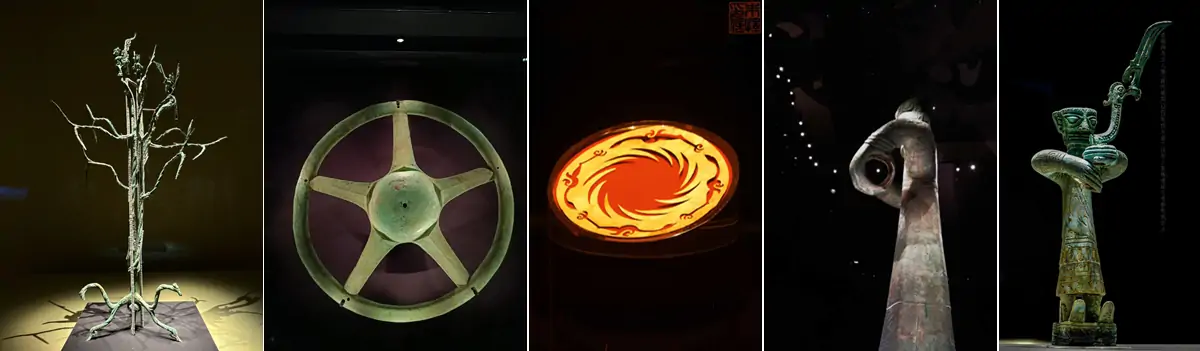
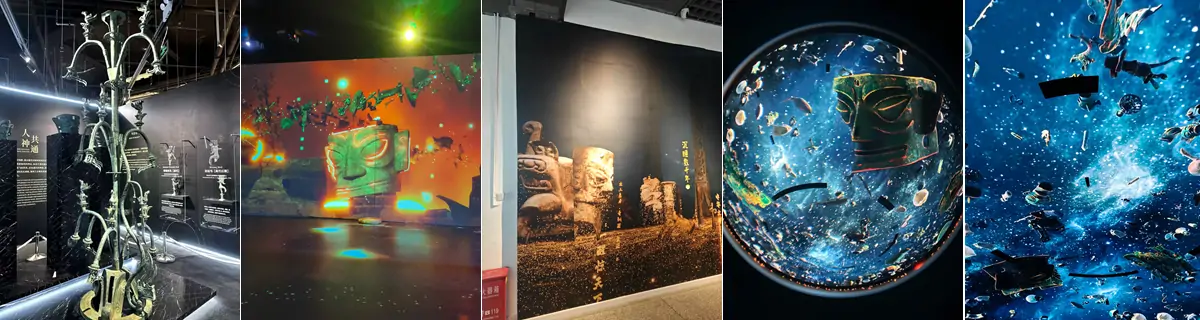
The Universe, Humans, and Gods hall is the core display area for the spiritual world and sacrificial beliefs of Sanxingdui, and it is also the most mysterious exhibition hall. Fine jades to pay respect to heaven and earth, uniquely shaped divine altars, masks with protruding eyes looking thousands of miles away, statues combining humans and birds, phoenixes spreading wings to fly, and sacred trees connecting earth and heaven—all deeply harbor absolute reverence for heaven, earth, gods, and all things in nature, showcasing the romantic imagination and extraordinary creativity of the ancient Shu ancestors.
Artifact Conservation Center
The Artifact Conservation Center is a unique area where you can experience cultural relic protection work at close range. There is no conventional exhibition arrangement here; instead, it truly restores the actual working scenes of artifact restoration. Visitors can look through the glass to understand how broken and incomplete artifacts are step-by-step restored under professional techniques, reappearing their magnificent looks from three thousand years ago, and directly experiencing the rigor and difficulties of Sanxingdui artifact protection and research.
Temporary Exhibitions and Digital Experience Hall
The temporary exhibition halls launch various themed special exhibitions from time to time, displaying cultural research results related to Sanxingdui and comparative artifacts from other regional civilizations. The content changes regularly to bring more freshness to your visit.
The Digital Experience Hall utilizes modern lighting and multimedia technology to recreate the daily life scenes, sacrificial grand occasions, and mythological legends of the ancient Shu capital in an immersive way, making static artifacts vivid and fresh. This allows tourists to understand the mystery and grandness of Sanxingdui more intuitively and deeply.
How to Visit
- Tickets: 72¥/person
- Opening Hours: 8:30-18:00 (8:30-20:00 in January, February, July, and August)
- Recommended Route: First visit 1F Century-long Dream Chase to understand the archaeological journey; then view national treasures like the gold cane and the Bronze Standing Figure in Majestic Capital; go up to 2F Universe, Humans, and Gods to check out the sacred tree and the mask with protruding eyes; finally, visit the Artifact Conservation Center and browse the cultural and creative souvenir area. This route highlights key points without forcing you to backtrack, helping you understand why the Sanxingdui site is so mysterious and carries such important historical significance.
Practical Tips for Visiting Sanxingdui Museum:
- Book your Sanxingdui Museum tickets in advance, as there are many tourists during holidays.
- A visit of 3–4 hours is recommended. If you want a deep understanding, it is best to reserve half a day.
- On holidays, it is recommended to arrive early in the morning, as the crowds increase significantly in the afternoon.
- It is recommended to rent an audio guide or hire a tour guide. Visiting sequence: 1F Century-long Dream Chase → Majestic Capital → 2F Universe, Humans, and Gods → Conservation Center → Souvenir Area.
- Photography with flash is prohibited in some exhibition halls. Please pay attention to the signs on site.
Understand the ancient Shu civilization and meet the mysterious Sanxingdui. Stepping into Sanxingdui is not just a simple trip, but more like a dialogue across thousands of years of civilization. The mysterious bronzes, ancient Shu culture, and historical legends are all worth experiencing in person. We look forward to starting an unforgettable cultural journey with you at Sanxingdui.
Email: [email protected] WhatsApp:+86 15347723823 , ++86 15347723823
FAQ
Q: How much time is needed to visit Sanxingdui? What is the best route?
A: A highlight tour takes 2.5-3 hours, and a deep tour takes 4-5 hours. Recommended route: 1F Century-long Dream Chase → Majestic Capital (Gold Cane, Bronze Standing Figure) → 2F Universe, Humans, and Gods (Bronze Sacred Tree, Mask with Protruding Eyes) → Artifact Conservation Center → Souvenir Area.
Q: Is catering available inside the museum? Can I bring my own food?
A: Light meals are available inside the museum, costing around 30-40 RMB per person. You can bring your own drinking water and a small amount of snacks, as prices inside the museum are relatively high.
Q: Do I need to rent a guide for the visit? What guiding methods are available?
A: Renting a guide is recommended. Audio guide devices cost 20 RMB/unit. Human tour guides cost 150 RMB/group (1-10 people) and require advance booking. You can also download the "Sanxingdui AR" APP to listen to the guide for free.
Q: Is photography allowed inside the museum? What are the restrictions?
A: Photography is allowed, but it is strictly forbidden to bring flashes, tripods, or selfie sticks into Sanxingdui Museum. Some exhibition halls have "No Photography" signs; please follow the regulations.
Q: Is Sanxingdui suitable for children or seniors?
A: Yes, it is suitable. However, the exhibition area is quite large, so it is recommended to arrange reasonable rest periods. You can also choose sightseeing cars or visit in stages.
Q: When is the best time to visit Sanxingdui?
A: Spring and autumn (March to May, September to November) offer comfortable weather and a better visitor experience. It is best to avoid peak holiday crowds.