12 Days Lhasa-Nyingchi-Yamdrok Lake-Shigatse-Mt.Everest-Namtso Lake Tour
Nyingchi, Basumtso lake, Lulang forest,Kadinggou,Everest base camp, Yamdrok lake, Namtso lake
This route covers almost all important highlights in Tibet including Kading gou, sejiala pass, lulang forest, Basumtso lake, Potala Palace, Johnkang temple, Bakor street, Yamdrok lake, Kharola glacier, Gyantse kumbum , Tashilunpo monastery, Rongbuk monastery, Mt.Everest base camp, Namtso lake. It is the perfect choice if a traveler want to include as many places as possible.
Duration
12Days
Group Size
15
Max Altitude
5200
Best Time
All Year Around
Itinerary
Upon your arrival at the Lhasa airport, your tour guide will greet you and take you to your hotel and help you check in. You will have the rest of the day and evening to rest and relax to become acclimatized to the higher altitude of Tibet.
Meals: None
Accommodation: Lhasa
Warm Reminder:According to regulations, foreign tourists and tourists from Taiwan (China) must be accompanied by a licensed tour guide when arriving in or departing from Lhasa. The travel agency will inform you of the hotel check-in procedure in advance, to facilitate your check-in at the front desk. If you do not receive the notification, please contact the travel agency staff promptly (see the group departure notice for details), and we will provide you with timely assistance. Your tour guide will notify you of the assembly time for the next day via phone call or text message before 10:00 PM.
Travel Tips:
1) Pick up/drop off: Foreign and Taiwanese travelers need a tour guide to pick up/drop off according to the regulations of the Tourism Administration. Chinese traveler without foreign partner will pick up/drop off by local professional Transfer Center. Our staff/guide will contact you in advance, please ensure that your mobile phone is unobstructed.
2) Altitude sickness: With its much higher elevation, some visitors may experience symptoms of altitude sickness. We recommend
* Take a good rest and stay calm. This is the best way to prevent altitude sickness.
* Avoid strenuous activity and you’d better not take a shower on the first night to prevent catching a cold.
* Do not drink alcohol. Instead, drink plenty of water, eat fruits, and avoid heavy meals.
* If you wish, you can prepare herbal or oxygen supplements such as Rhodiola, American ginseng lozenges, or Gaoyuan’an to help with adaptation.
* Always follow the advice of your local guide. If you feel unwell, inform your guide and seek medical attention promptly.
This morning, our knowledgeable guide will meet your group at the hotel. Let’s begin our journey into the eastern part of Tibet! Depart from Lhasa and embark on a scenic drive to Nyingchi.
Along the way, enjoy the breathtaking landscapes along the Lalin Expressway, renowned as one of the most picturesque highways in China. Part of both the Sichuan–Tibet and Yunnan–Tibet high-grade routes, this road offers mesmerizing views of snow-capped mountains, dense forests, and vast grasslands. Take your time to capture these striking vistas with your camera!
After about 4–5 hours on the road (366 kilometers), you will arrive at Kadinggou (altitude: 2,980 m), often praised as “Heaven on Earth.” As you step into the gorge, you’ll be surrounded by the soothing sound of water flowing through the pristine forest. Here, you can admire towering mountains, dramatic valleys, unique rock formations, ancient trees, and even stretches of bamboo forest.
Following your exploration of Kadinggou, continue your short drive (about 30 km) to Nyingchi for accommodation.
Meals: Breakfast
Accommodation: Nyingchi
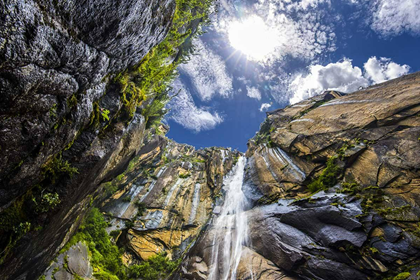
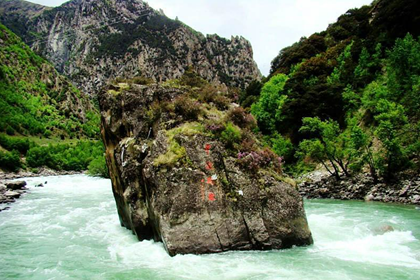
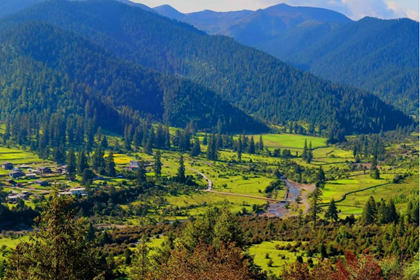
This morning, your group will enjoy refreshing nature excursion in the Nyingchi region. Travel from Nyingchi City to Segrila Pass, located about 48 kilometers away. At an elevation of 4,768 meters, Segrila Pass is one of the highest road passes in Nyingchi. Situated on the southeastern edge of the Nyainqentanglha Range, it offers sweeping panoramic views of the surrounding snow-capped mountains. On clear days, you’ll be rewarded with spectacular sight - Mount Namche Barwa, the highest peak in the eastern Himalayas. Rising to 7,782 meters, this striking peak is renowned for its dramatic beauty and is often regarded as one of the most breathtaking mountains in Tibet.
Continue to the Lulang Forest Viewpoint. Lulang Forest is a lush, picturesque landscape often described as a “forest sea beneath the clouds.” Snowy peaks frame the valley, while the forest and meadows spread out in neat, layered patterns that look almost hand-crafted. Its serene, poetic scenery has earned Lulang the reputation of being a place “so beautiful that it makes people forget their homes.”
Afterward, return to Nyingchi City to explore Biri Holy Mountain. Known in Tibetan as “Monkey Mountain,” Biri is one of the most revered sacred mountains in Nyingchi and is said to have been blessed by Guru Padmasambhava. The scenic area features an ecological square, a creek-side zone, Tangcheng Monastery, forests of prayer flags, and ancient cultural relics. Thousands of pilgrims come here each year to circumambulate the mountain. The site is also home to the Nyingchi Natural Ecology Museum, which displays 586 species of plants and animals, highlighting the region’s extraordinary biodiversity. From the mountainside, you can enjoy panoramic views of Bayi Town, while the summit is adorned with vibrant prayer flags - each carrying blessings and prayers from local Tibetans.
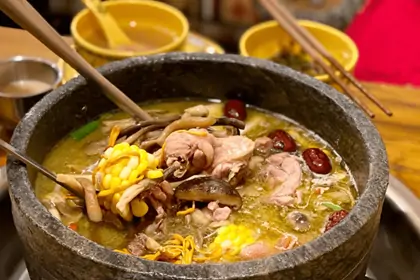
Special Meal Arranged: Lulang Stone Pot Chicken
A signature dish of the Nyingchi region, Stone Pot Chicken is prepared by slow-stewing local chicken with shouzhangshen (a type of wild ginseng) in a handcrafted stone pot. The resulting broth is aromatic and soothing, while the chicken is tender and rich in flavor. The pot itself is carved from rare soapstone found only in Motuo, carried out by porters and hand-chiseled by the Monpa people. These dark-green stone pots retain heat exceptionally well and naturally contain magnesium, iron, and 17 trace minerals.Warm Reminder:Due to limited capacity at the Basumtso Scenic Area, if hotels inside the scenic zone are fully booked or temporarily closed, your stay will be arranged in Nyingchi City instead. There will be no change in price, and all sightseeing activities will remain the same.
Meals: Breakfast & 1 special meal
Accommodation: Basumtso
This morning, enjoy the refreshing mountain air and the lush greenery around you as a new day begins.
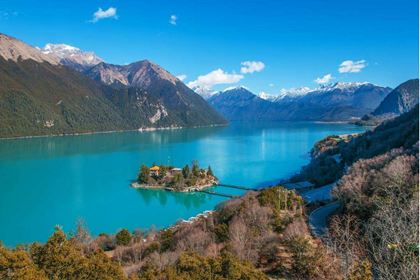
After breakfast, your group will travel to Basumtso Lake (3,538 m), also known as Basong Tso or Dragsum Tso. Located in Gongbo’gyamda County, this stunning alpine lake is famous for its turquoise waters that reflect the surrounding snow-capped peaks. As a national forest park and 5A scenic area, Basumtso offers beautiful landscapes that change throughout the day. The lake is also a sacred site in Tibetan Buddhism, especially for followers of the Nyingma sect, and is believed to be blessed by Guru Rinpoche and King Gesar.
Upon arrival, take in the peaceful atmosphere before visiting Tashi Island, a small island in the center of the lake. Here you’ll find Tsozong Monastery, a simple yet spiritually significant temple dating back to the 17th century. Enjoy a gentle walk around the island, where you’ll see highlights such as the Peach Embracing Pine, the remains of an ancient water-burial platform, and the unique “Letter Tree,” whose leaves naturally form symbols resembling Tibetan letters. Don’t miss the sacred well, an important part of local religious tradition.
Afterward, continue to Jieba Village, a picturesque Tibetan settlement that offers excellent views of Basumtso Lake and the surrounding snow mountains known as the “King’s Throne” and “Burning Flame.” The village provides a wonderful glimpse into authentic Tibetan culture and daily life.
When the visit concludes, begin the 4.5–6 hour drive back to Lhasa. Have a good rest in Lhasa.
Meals: BreakfastAccommodation: Lhasa
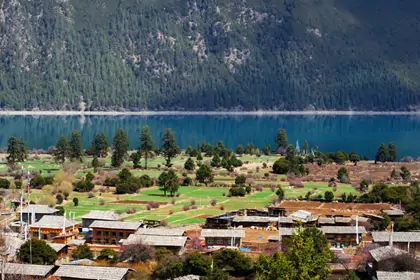
Today we will visit the Lhasa Traditional Handicraft Center and Sera Monastery.
Traditional Handicraft Art Center
Today we will take you to fully immerse yourself in experiencing traditional Tibetan Traditional Handicraft Art Center. Experience Tibetan incense crafting (a sacred Buddhist practice), explore the ancient Tibetan script (derived from Sanskrit), and uncover the mysteries of traditional woodblock printing (used for sutra reproduction for centuries). Tibetan incense is commonly burned as an offering during Buddhist ceremonies and rituals. Its ingredients often include juniper, sandalwood, cedar-wood, cinnamon, cloves, and a variety of medicinal herbs.In addition to crafting incense, you can observe the full process demonstrated by the local artisan, who will teach you Tibetan calligraphy and help you write your own name or blessing in the Tibetan script. This makes for a meaningful keepsake to bring home as a memory.
Sera Monastery
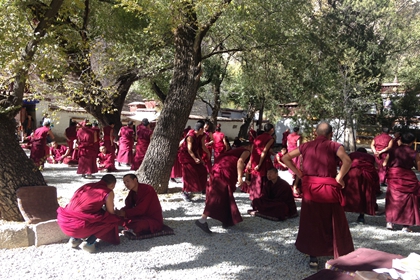
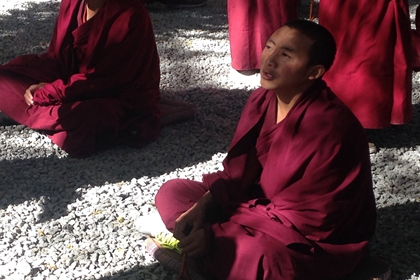
The monk debate in Sera Monastery is held in the courtyard almost every day between 3:00pm and 5:30pm. Please note that in case of some special monastery activities such as the Dharma Meeting or the reception of VIPs, the monk debates may be canceled that day. After our visit to the monastery, feel free to stroll around the streets of Lhasa as you absorb the atmosphere and spirit of the devoted Tibetan people, or you may return to your hotel to rest and relax from this wonderful Tibetan cultural experience.
Warm Reminder:
* If today falls on Sunday, you will only visit the Sera monastery without debating. We will appreciate your understanding!!
* If Sera monastery holds temporary religious ceremonies or receives special guests, the debating could be canceled.
Meals: Breakfast
Accommodation: Lhasa
Today we will visit the highlights of Lhasa city Potala Palace, Jokhang Temple and Barkhor Street.
Potala Palace
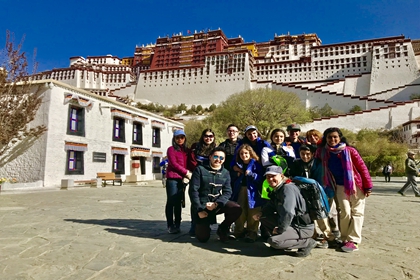
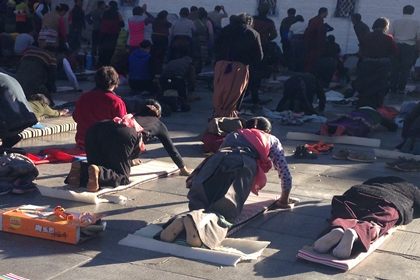
Initially built in 641 AD and listed as a world heritage site in 1994, the Potala Palace is the most popular tourist attraction in Tibet. The halls, murals, statues and mountain views will make you shocked even if you are not a Buddhist.As you wander through the halls, chapels, and sacred shrines that honor past Dalai Lamas, you’ll be captivated by the intricate murals, exquisite carvings, dazzling jeweled decorations, and the deep spiritual atmosphere that fills the air. Inside the Potala Palace, countless Tibetan pilgrims can be seen bowing and praying devoutly - for many, visiting this sacred site is the journey of a lifetime.Your guide will also share fascinating stories about King Songtsen Gampo, the 33rd ruler of Tibet, who originally built the Potala Palace in the 7th century to honor his marriage to Princess Wencheng of the Tang Dynasty.
【Ticketing tips for the Potala Palace】
* All visitors must enter as part of a guided group and can stay inside for a maximum of one hour.
* Tickets are issued under a real-name reservation system. A valid ID, MTP or passport is required, and once reserved, rebooking is not allowed within 7 days.
* Entry times are assigned randomly by the Potala Palace Administration, and it’s not possible to choose your visiting hour.
* During peak season, your travel group may be split into smaller sub-groups with different visiting times or guides.
* Photography is strictly prohibited inside the palace.
* The Potala Palace is closed on Mondays. If your visit happens to fall on Monday, the itinerary will be adjusted accordingly. Please confirm the final arrangements with your travel consultant.
Jokhang Temple
The Jokhang Temple is the final destination for pilgrims. A statue of the 12-year-old Sakyamuni, who lived in India in the fifth century BC, and who was the creator of Buddhism, is collected in the monastery. This is the reason why Buddhists consider Lhasa a Sacred Land.According to legend, Jokhang Temple was built by King Songtsen Gampo for his two brides - Princess Wencheng of China and Princess Bhrikuti of Nepal. The name Jokhang means “House of the Buddha,” and the temple enshrines a life-sized statue of the 12-year-old Sakyamuni, one of the most sacred treasures in the Buddhist world. This makes Jokhang Temple the holiest pilgrimage site in Tibet.Take time to explore the temple’s intricate architecture - admire the colorful murals, ornate decorations, and fine carvings that showcase the essence of Tibetan craftsmanship. From the second floor, you can enjoy a panoramic view of the bustling Barkhor Street below.
【Ticketing tips for the Jokhang Temple】
* Visiting time: about 1 hour
* Admission requires real-name reservation through the “Jokhang Temple Reservation” WeChat between 7:00–23:59 for the next day. Reservations are limited, so please book in advance with your guide’s assistance.
* Jokhang Temple is an active religious site. During important religious ceremonies or special events, access may be restricted - your understanding is appreciated.
Barkhor Street
Located near the Jokhang Monastery, the Barkhor Street was only a place for Buddhists to do a religious circumambulation in ancient times. Nowadays, tourists can buy exquisite souvenirs on the street, such as handicrafts, costumes, tea, prayer wheels and Tibetan incense.
Meals: Breakfast, 1 special meal (Tibetan or Nepalese specialty cuisine)
Accommodation: Lhasa
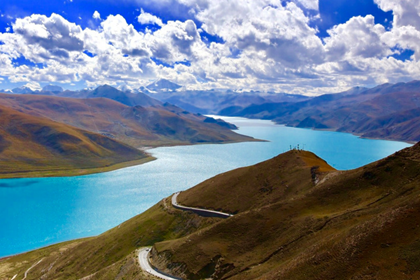
This morning we’ll take a drive up to the Kampala Pass (elevation 4797 meters) where you’ll have a glimpse of Yamdrok Lake down below as well as spectacular views of the holy Mount Nyenchen Khangsar in the distance. You will want to have your camera at the ready for the turquoise waters of Yamdrok Lake, which is one of the three holy lakes of Tibet, and the beautiful Mt. Nyenchen Khangsar glacier as seen from the Karol la Pass. Later on we’ll be able to visit the Karola Glacier (5,012 m) - one of Tibet’s three major continental glaciers and a filming site of the movie Red Valley (Hong He Gu). Backed by Naiqin Kangsang Peak (7,191 m), the glacier gleams like a frozen waterfall cascading right beside the highway. You can enjoy the view from your vehicle or take a short, easy walk to the glacier’s base. Across the road, admire the majestic snow-capped Mount Kalurong - another highlight of this alpine wonderland.
【Travel Tips for the Karola Glacier】
* The altitude here is about 5,012 meters, so move slowly and avoid overexertion.
* The public toilets are very basic - be prepared.
* Some locals may charge a small fee for taking photos with them or their animals - always confirm before photographing.
Warm Reminder: For foreign and Taiwan travelers, registration at the Shigatse Entry & Exit Administration Office is required. Your guide will assist with the process and may adjust the schedule accordingly - please follow their instructions and cooperate as needed.
Meals: Breakfast
Accommodation: Shigatse
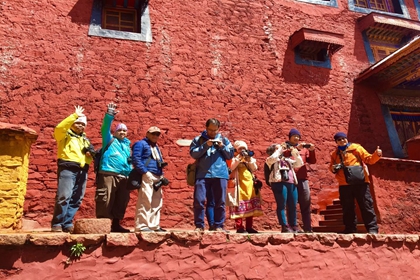
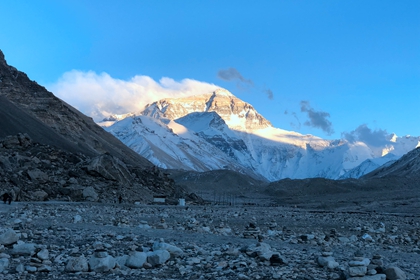
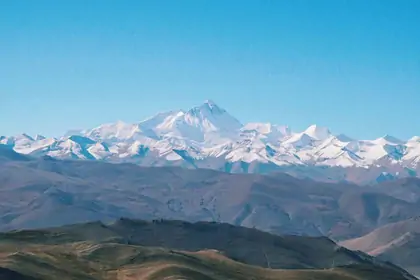
After breakfast we’ll set out towards the peak of the world – Mount Everest via Gawula Pass, which is also known as the Everest Viewing Platform. On clear days, this is one of the few places on Earth where you can see five of the world’s highest peaks above 8,000 meters lined up before you - Everest, Lhotse, Makalu, Cho Oyu, and Shishapangma. The panoramic view is awe-inspiring, with the mighty snow peaks stretching endlessly across the horizon. Departing from Shigatse you will see some of the most beautiful and unique scenery in the world – incredibly blue skies, floating high clouds, endless grasslands and the highest mountain peaks in the world. We’ll also stop by the Rongbuk Monastery – the world’s highest altitude monastery before spending the night at the Everest Base Camp. Rongbuk Monastery belongs to the Nyingma school of Tibetan Buddhism, and is home to both monks and nuns. The monastery is divided into old and new sections - the old one preserves meditation caves believed to have been used by Guru Padmasambhava, while the new section offers a spectacular view of Mount Everest’s north face. The white chorten and mani stones at the entrance make for iconic photo compositions - quiet, sacred, and timeless. Everest Base Camp is the closest point ordinary travelers can get to the world’s highest peak. Surrounded by tented lodges, EBC stands just 19 km in a straight line from Mount Everest’s summit. Here, you can truly feel the majesty of the mountain - towering, powerful, and humbling. Many visitors describe this as a once-in-a-lifetime experience, with Everest’s sheer presence leaving an unforgettable impression.
【Warm Tips for Visiting EBC】
* From Everest Town (50 km from EBC), travelers must transfer to the eco-friendly shuttle bus for the final stretch to Base Camp, and return the next day the same way. Your main driver and vehicle will not accompany you - please bring all essentials with you.
* Accommodation at EBC is in tented camps (reconstructed in 2025) with improved facilities, now offering twin rooms and a simple dining tent. However, amenities remain basic with shared bathrooms. Supplies are limited due to high altitude, so please be understanding.
* During winter, if the tent camp is closed due to weather, the group will stay in a guesthouse in Everest Town (or called Tashizom Town) (with private bathroom).
* The altitude and temperature can be extreme - even in summer, nighttime temperatures may drop to 0-8°C. Please dress warmly or rent a down jacket at Base Camp if needed.
Meals: Breakfast, 1 special meal (Everest Hot Pot)
Accommodation: EBC
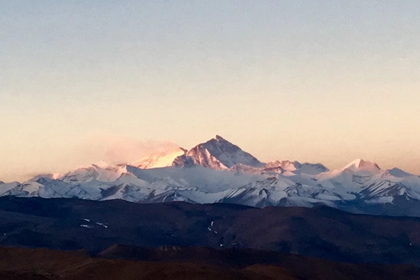
We will get an early start today to cross the Gyatso La Pass, the highest point along the Sino-Nepal Friendship Highway and part of the Mount Everest National Nature Reserve. From the viewing platform, admire the towering peaks of Mount Everest (8,848.86 m), Cho Oyu, Lhotse, and Makalu, all rising above 8,000 meters. The colorful prayer flags fluttering in the wind add a touch of sacred beauty to this spectacular panorama - a perfect spot for photos. In the afternoon we will drive back to Shigaste.
Meals: Breakfast
Accommodation: Shigatse
Travel Tips: If weather permits, you can enjoy the Golden Summit view - one of the most breathtaking sights on Earth. The best seasons are spring (April-May) and autumn (September-November), when the skies are usually clear. You'll need to rise early and take a short hike to the viewing point to see the snow-capped peaks glowing golden in the morning light.
In the morning we will visit the Tashilunpo Monastery and then continue to drive 4.5-5 hours (270 km) back to Lhasa.
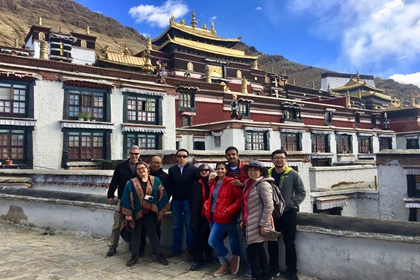
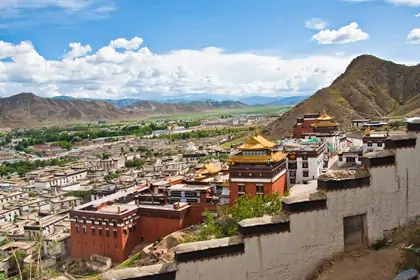
Tashilunpo MonasteryTashilumpo Monastery, the seat of Tibet's second highest incarnation-the Panchen Lama. The immense complex is a rambling warren of chapels, shrines, and halls linked by mysterious alleyways and steep staircases. At the center of the monastery is a courtyard that was used as a theater for religious dances. Just off the great courtyard in Tashilumpo’s main hall, where, like the explorer Sven Hedin, we may hear “the monks…intone a chant…enthralling, mystical, full of yearning…soothing as a cradle, intoxicating as wine, and sedative as morphia.” We'll visit this dark and evocative chamber and its many side altars, as well as a distinctive red building called the Jamkhang Chenmo, which houses a massive yet lyrical 90-foot tall statue of Maitreya, the Future Buddha, built in 1914 by the Ninth Panchen Lama while Europe was madly at war.
【Highlights of Tashilunpo Monastery】
* Admire the Maitreya (Future Buddha) Chapel, which enshrines a magnificent bronze statue of the Maitreya Buddha - made with over 115 tons of copper, 250 kg of gold, and adorned with more than 1,400 precious jewels including diamonds and pearls.
* Pay respect to the sacred stupas (reliquary chortens) of successive Panchen Lamas, exquisitely crafted with gold, silver, coral, pearls, turquoise, and silk.
* Enjoy a panoramic view of Shigatse city and the serene monastic life, where monks in crimson robes chant sutras echoing through the halls.
Meals: Breakfast
Accommodation: Lhasa
Travel Tips: Please note we will arrange you to take train or tourist vehicle back to Lhasa from Shigatse according to conditions. No designation will be acceptable.
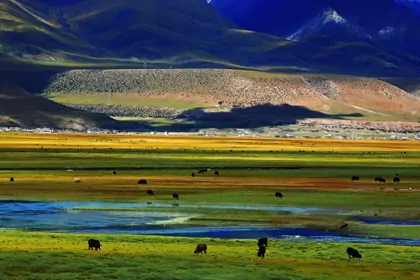
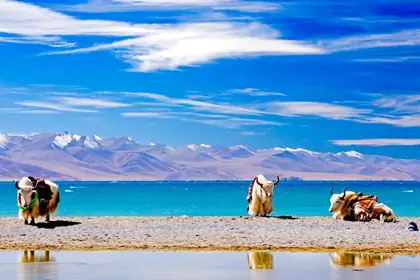
In the morning, your group will depart from Lhasa and travel toward another holy lake of Tibet. After driving about 280 km, you will reach a viewpoint overlooking the Nyenchen Thanglha Mountain Range (7,162 m), one of Tibet’s most revered holy mountains. Along the way, you’ll pass herds of Tibetan yaks and sheep, and with a bit of luck, you may spot wild animals such as kiangs (wild donkeys), pikas, hares, or foxes. Crossing Laken La Pass (5,190 m), you will soon arrive at Namtso Lake (4,718 m), one of the highest lakes in the world.
Namtso is one of the three holy lakes of Tibet, believed to be the spiritual home of a Tibetan goddess. Surrounded by snow-capped peaks and vast grasslands, it is also the highest saltwater lake in China. Its crystal-clear waters shift from deep blue to turquoise throughout the day, making it a paradise for photography. Capture the ever-changing colors of the lake, the Nyenchen Thanglha peaks, and scenes of nomadic life. According to legend, Namtso Lake is the wife of Nyenchen Thanglha Mountain, the two forever inseparable.
You will explore Tashi Dor Island, the largest island on the lake. Enjoy a short hike, visit small monasteries, view unique rock formations, and experience tranquil atmosphere. After the tour, be escorted back to Lhasa.
Warm Reminder: Due to harsh winter conditions, Namtso may close temporarily because of heavy snowfall.
* If closure is announced one day in advance, the itinerary will be adjusted to: Lhasa → Ganden Monastery (light hiking on the kora path) → Lhasa
* If closure is announced on the travel day, the itinerary will be adjusted to: Lhasa → Tsurphu Monastery → Lhasa
Meals: Breakfast
Accommodation: Lhasa
Today you will have free time until your tour guide escorts you to the Lhasa train station or airport for your departing train or flight from Lhasa. This will end your tour services in Tibet.
Meals: Breakfast
Accommodation: None
Service Inclusions
- Regular licensed tourist vehicles (7–26 seats): If there are fewer than 4 travelers for Lhasa city sightseeing, your guide will accompany you by taxi, and the taxifare will be covered by the travel agency.
- Standard twin rooms in basic hotels (double occupancy): Single-bed rooms (king-size) are not guaranteed; no extra bed or breakfast is provided for travelers not occupying a bed.
- Breakfasts (refer to“Hotel Reference List” for details), 3 complimentary local specialty meals (non-refundable if not used)
- Professional Chinese-speaking, English-speaking, or bilingual (Chinese–English) guides
- Entrance tickets: Kadinggou, Lulang Forest, Basumtso Lake, Tibetan Culture Experience, Sera Monastery, Potala Palace, Jokhang Temple, Yamdrok Lake, Karola Glacier, Rongbuk Monastery, Mount Everest Base Camp (Eco-bus included), Tashilhunpo Monastery, Namtso Lake (Eco-bus included)
- Tibet Permits: Tibet Entry Permit, Alien Travel Permit, and Military Permit (if applicable)
- Travel Accident Insurance, Vehicle Passenger Insurance, Travel Agency Liability Insurance
- Pick-up and drop-off service at the airport/train station on tour date: Airport (Lhasa Gonggar Airport): Free pickup for arrivals between 08:00–22:00, Free drop-off for flights departing between 08:30–22:30; Train Station (Lhasa Railway Station): Free pickup and drop-off available
- Oxygen & Drinking Water: 1 small portable oxygen bottle per person; 2 bottles of mineral water (300 ml) per person per day; 1 medical oxygen tank (6.8L) in the vehicle for emergency
- Potala Palace Audio Service: To enhance your visit, your guide will help rent an audio device at the entrance. Please handle it carefully and return it after the tour.
- Souvenir: One Potala Palace refrigerator magnet as a memento of your journey in Tibet
- Service fee
Service Exclusions
- Single room supplement
- Personal expenses
- Force majeure
- Tips to the guide and driver: Tips are not required but expected. We suggest 30 CNY per person per day to the guide and another 30 CNY per person per day to the driver.
- Flight/train to and leave Lhasa
Price Date
| Month | Available Date | Price | Number |
|---|---|---|---|
| Apr | Apr 1, 2026 | From $1,441 | 4 |
| Apr 8, 2026 | From $1,441 | 8 | |
| Apr 15, 2026 | From $1,441 | 4 | |
| Apr 17, 2026 | From $1,441 | 6 | |
| Apr 22, 2026 | From $1,441 | 5 | |
| Apr 24, 2026 | From $1,441 | 3 | |
| Apr 29, 2026 | From $1,603 | 8 | |
| May | May 6, 2026 | From $1,441 | 4 |
| May 10, 2026 | From $1,441 | 5 | |
| May 13, 2026 | From $1,441 | 6 | |
| May 17, 2026 | From $1,441 | 3 | |
| May 20, 2026 | From $1,441 | 4 | |
| May 24, 2026 | From $1,441 | 5 | |
| May 27, 2026 | From $1,441 | 7 | |
| Jun | Jun 3, 2026 | From $1,441 | 3 |
| Jun 10, 2026 | From $1,441 | 4 | |
| Jun 14, 2026 | From $1,441 | 2 | |
| Jun 17, 2026 | From $1,441 | 5 | |
| Jun 19, 2026 | From $1,441 | 2 | |
| Jun 24, 2026 | From $1,441 | 4 | |
| Jul | Jul 3, 2026 | From $1,603 | 3 |
| Jul 11, 2026 | From $1,603 | 4 | |
| Jul 18, 2026 | From $1,603 | 7 | |
| Jul 25, 2026 | From $1,603 | 5 | |
| Aug | Aug 1, 2026 | From $1,603 | 4 |
| Aug 8, 2026 | From $1,603 | 6 | |
| Aug 15, 2026 | From $1,603 | 9 | |
| Aug 22, 2026 | From $1,603 | 2 | |
| Aug 29, 2026 | From $1,441 | 3 | |
| Sep | Sep 2, 2026 | From $1,441 | 5 |
| Sep 5, 2026 | From $1,441 | 7 | |
| Sep 9, 2026 | From $1,441 | 4 | |
| Sep 12, 2026 | From $1,441 | 5 | |
| Sep 14, 2026 | From $1,441 | 7 | |
| Sep 20, 2026 | From $1,441 | 4 | |
| Sep 27, 2026 | From $1,603 | 8 | |
| Oct | Oct 3, 2026 | From $1,603 | 5 |
| Oct 7, 2026 | From $1,441 | 4 | |
| Oct 10, 2026 | From $1,441 | 4 | |
| Oct 14, 2026 | From $1,441 | 2 | |
| Oct 17, 2026 | From $1,441 | 5 | |
| Oct 24, 2026 | From $1,441 | 4 | |
| Oct 31, 2026 | From $1,441 | 5 | |
| Nov | Nov 7, 2026 | From $1,294 | 3 |
| Nov 14, 2026 | From $1,294 | 2 | |
| Nov 21, 2026 | From $1,294 | 1 | |
| Nov 28, 2026 | From $1,294 | 4 | |
| Dec | Dec 5, 2026 | From $1,294 | 3 |
| Dec 12, 2026 | From $1,294 | 3 | |
| Dec 19, 2026 | From $1,294 | 5 | |
| Dec 26, 2026 | From $1,294 | 2 |
Related Tours
8 Days Lhasa-Yamdrok Lake-Shigatse-Everest Group Tour16 Days Lhasa-Shigatse-Mt Everest-Mt. Kailash & Guge Kingdom Tour11 Days Lhasa-Nyingchi-Yamdrok Lake-Shigatse-Mt.Everest Tour9 Days Lhasa-Nyingchi-Yamdrok Lake-Shigatse TourHave a Question?
Please click the button below, and we will respond within 24 hours.
If you have WeChat or WhatsApp, please feel free to scan our codes, click the image below to enlarge.